


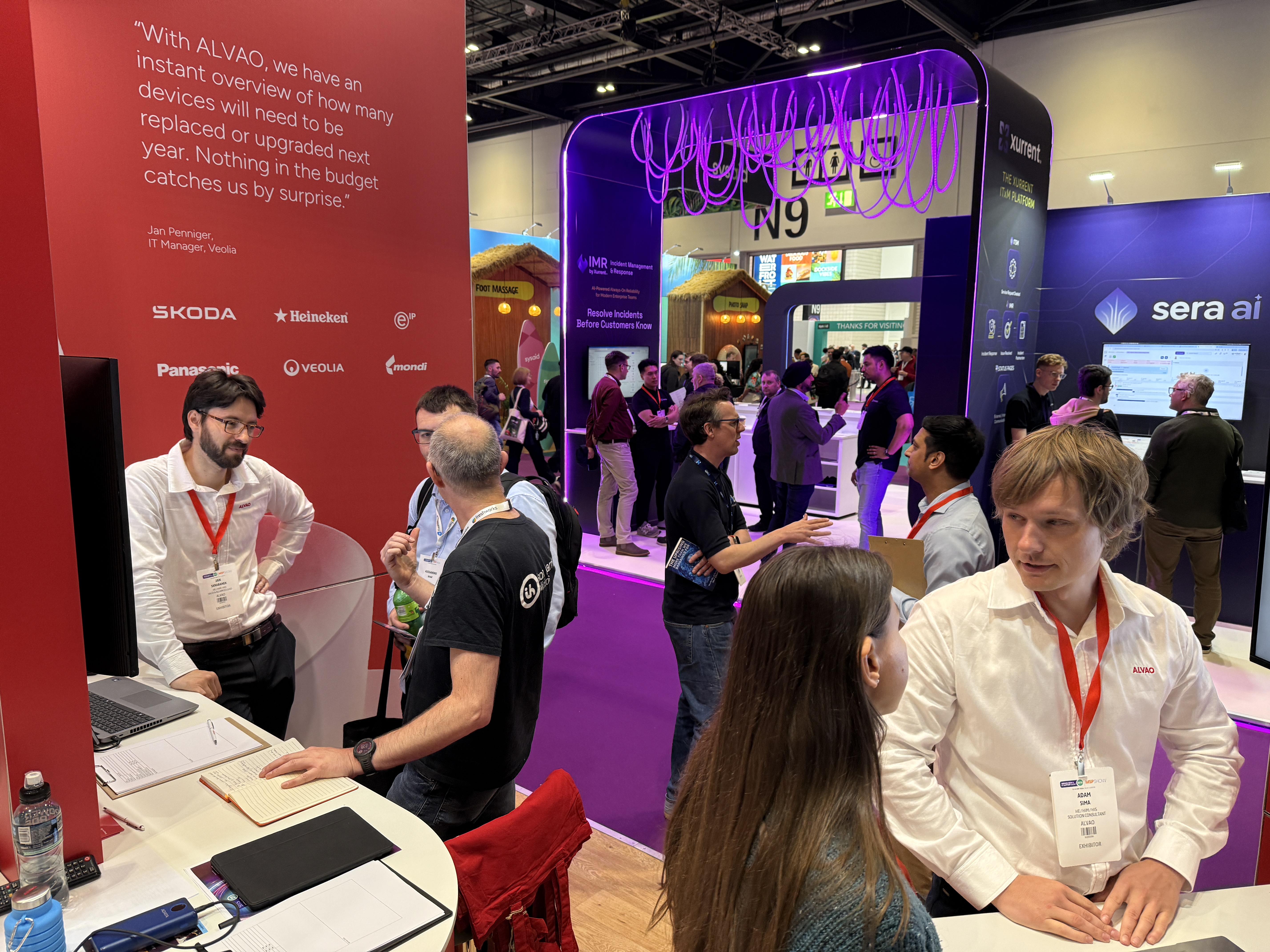
The Service Desk & IT Support Show (SITS) marked its 30th edition this year at ExCeL London. Three decades in, it still does one thing very well: it brings together the people who actually run IT support and gives space for honest conversations.
We were there. We spoke with many of you. And a clear pattern emerged.
The questions at our stand were no longer about tickets. They were about assets.
After years of IT Asset Management (ITAM) sitting in the background of IT Service Management, SITS 2026 felt different.
Not “we’ll deal with it later,” but “this is what everything else depends on.”
So this recap focuses on ITAM. That’s where the energy was.
ITAM as the foundation, not an afterthought
ITAM used to be routine work. A spreadsheet. Updated occasionally. Rarely trusted. That’s changing. Teams are realizing something simple:
Service quality, security, and cost control all depend on asset data. And if the data doesn’t match, neither does anything else.
We kept hearing one phrase: “single source of truth.” Not as a slogan. As a problem people genuinely want to solve. No one wants to reconcile three inventories that never agree.
Zero-touch instead of manual tracking
The most common topic? Automating the asset lifecycle.
Manually tracking what is deployed, where it is, and who is using it no longer scales. The direction is clear: zero-touch ITAM.
Discovery fed automatically from tools already in place: Microsoft Intune, Jamf, Lansweeper. People step in only when something doesn’t fit.
The mindset is shifting: not “keep the database updated,” but “set it up so it stays accurate on its own.”
ITAM and security are coming together
This came up repeatedly, often from people outside traditional ITAM roles. Security teams have reached a simple conclusion:
You can’t protect what you can’t see.
Unknown devices and unmanaged software are not just operational issues. They are risk. IT Asset Management is quietly becoming a security control.
Cost pressure and audits
Budgets are under scrutiny. And it shows. SaaS sprawl is a common problem:
- unused subscriptions,
- over-provisioned licenses,
- renewals that happen without clear ownership.
Several conversations went straight to the point:
“We think we are wasting money. We just can’t prove where.”
Accurate asset and license data changes that. It also turns vendor audits from stressful events into routine checks.
Sustainability, taken seriously
This is no longer just a talking point. Hardware lifecycle, refresh cycles, and disposal came up more often than in previous years. It’s about environmental responsibility, but also about cost. Again, it comes back to the same thing:
you need to know what you own, how old it is, and when it actually reaches end-of-life.
A note on Maf’s session
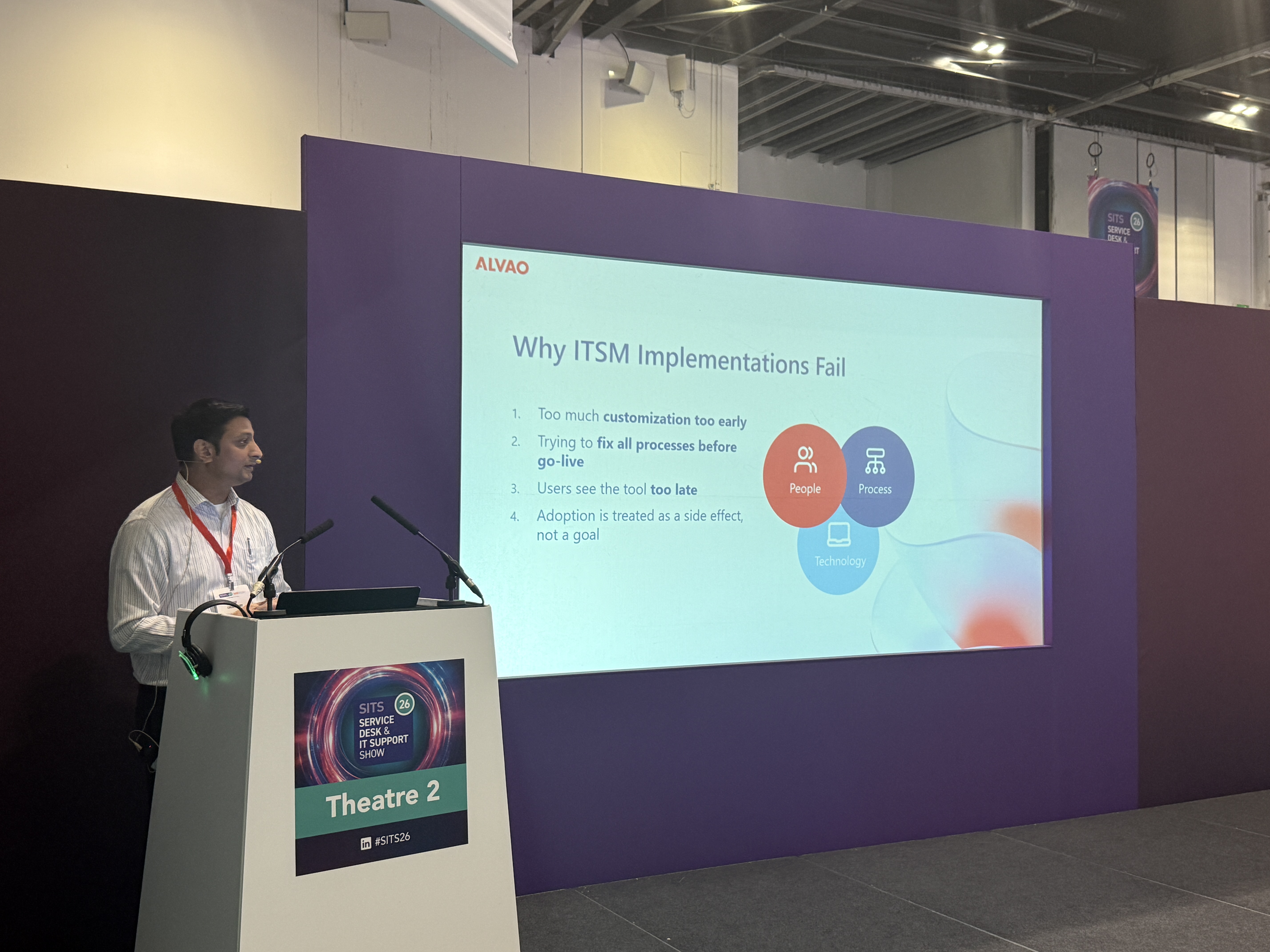
For the third year, we had a speaker on the agenda. This time Maf Chowdhury with “Implementation Without Drama: A Practical Guide for ITSM Teams.”
It focused on ITSM, but the underlying theme was clear: data first.
- Start with a single source of truth
- Sync from reliable sources
- Aim for zero-touch asset management
The session worked because it was practical. When asset data is clean, everything on top becomes easier: service desk, automation, reporting.
Where this leaves us
If SITS 2026 had a quiet theme, it’s this:
IT Asset Management has grown up. It’s no longer the less visible part of service management.
It’s the foundation that service quality, security, and cost control are built on. The teams moving forward are not the ones with the most features. They’re the ones with data they can trust.
When it fits, everything else becomes easier